


By Aliyu Baba Mohammed
A frustrated community leader’s Facebook post exposes the shocking state of rural education in Kaduna State, as Hon. Abubakar Abdullahi Kauru posted photos of Central Primary School Kauru on Facebook and asked a simple question that thousands of Nigerians always ask when issues worsen: where are our leaders?
The images show a school that has practically become a ruin. Cracked walls, collapsed roofing, broken windows, and classrooms that look more like abandoned buildings than places where children should learn. This is not a forgotten village school in some typical remote corner of Kaduna State. This is Central Primary School in Kauru, a local government headquarters/capital.
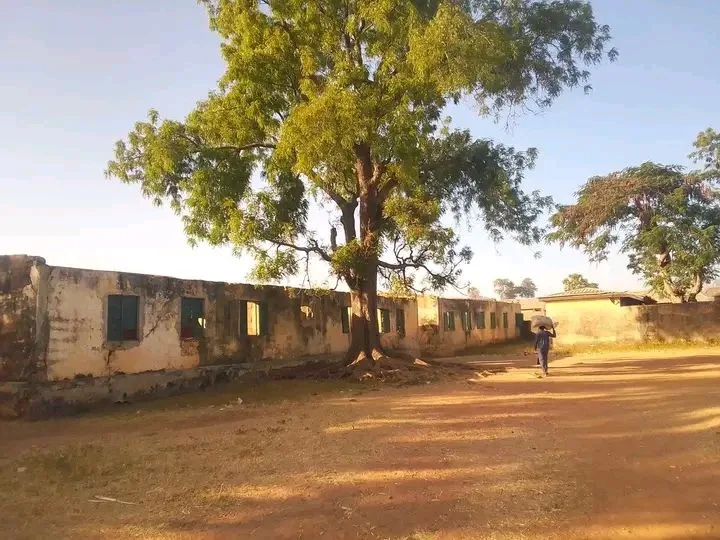
Hon. Kauru’s Facebook post was written in Hausa, and his frustration was clear from the first line:
Dan Allah banda zagi! ina Shuwaga banninmu suke a Kauru LG?
Translated as; “For God’s sake, no insults! Where are our leaders in Kauru Local Government?
He then listed the officials who should be responsible for the school’s condition: the Local Government Chairman, the State House of Assembly member, the Federal House of Representatives members, and those in positions of power. His message was direct: you are watching and listening while Central Primary School Kauru has turned into a ruin.
The phrase “Dan Allah banda zagi” (For God’s sake, no insults), shows a man trying to remain respectful even while calling out failure. He is not attacking anyone personally; he is simply asking why a primary school in a local government headquarters looks like this in 2025 despite the huge budget allocations to education.
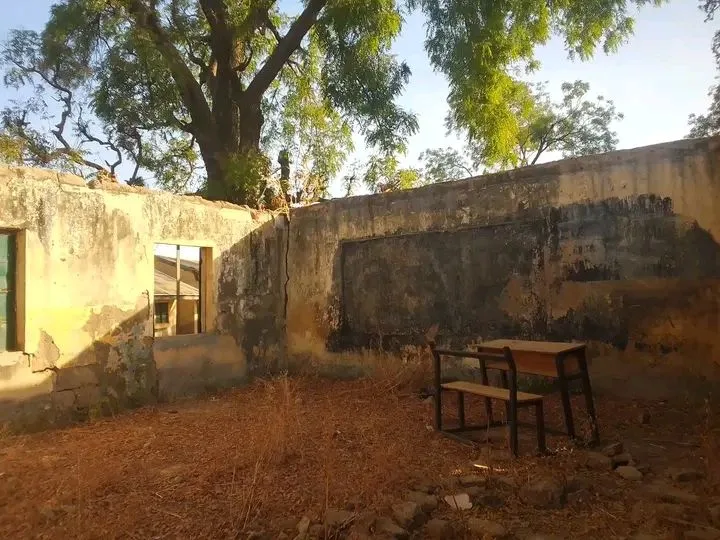
Who Should Answer? Hon. Kauru specifically called on several leaders to take action:
Dr. Bashir Yanko Dawaki, Chairman of Kauru Local Government Area. As the chief executive of the local government, basic infrastructure like primary schools should be his priority.
Senator Sunday Marshall Katung, Representing Kaduna South Senatorial District, which includes Kauru. Because Senators have constituency projects funds that should benefit communities like this.
Hon. Yusuf Bashir, Member representing Kauru Federal Constituency in the Federal House of Representatives. Federal lawmakers also have intervention funds meant for projects exactly like school renovations.
Hon. Mugu Yusufu, Member of Kaduna State House of Assembly for Kauru Constituency. State assembly members are supposed to be the voice of their communities in the state capital.
Hon. Ibrahim Sulaiman, Councilor for Kauru Ward, the closest elected official to the school itself.
That is five different elected officials representing one community, yet the primary school sits in ruins.
A pattern across rural Kaduna unfortunately, central primary school
Kauru is not alone. Dawn Herald has recently reported on dilapidated and collapsed schools across rural local government areas in Kaduna State. In Kubau, Ikara, and Makarfi, the story is the same: crumbling buildings, dangerous classrooms, and children trying to learn in conditions that should shame any government. Use these titles to search for the articles if you haven’t read them: One teacher, 600 pupils, zero classrooms: The reality in Dokan Rago, and Bare floors and broken roofs: How neglect is crippling basic education in Northern Kaduna.
The pattern is disturbing. Basic infrastructure is concentrated in urban and semi-urban areas while rural communities are left behind. Children in cities like Kaduna metropolis learn in renovated schools with proper roofing and furniture, while the children in places like Kauru learn in buildings that could collapse at any moment.
This is not just about buildings, it is about what we are telling rural children about their worth. When a government allows a school to become a ruin, it sends a message: your education does not matter, your future does not matter, and you do not matter.
What about education reforms?
The Kaduna State government under Governor Uba Sani has embarked on education reform programmes. There have been renovations, reconstructions, and construction of new classroom blocks across the state. These are good initiatives that deserve recognition.
But here is the problem: many rural communities are yet to benefit from these reforms in terms of infrastructure. The renovations seem to be happening mostly in urban areas where politicians visit regularly. Meanwhile, schools in places like Kauru continue to rot.
This raises an important question. Are education reforms truly statewide, or are they urban-focused? Is the government deliberately neglecting rural areas, or is there simply no proper system to identify and prioritize schools that need urgent intervention?
Why this matters
Some people might ask: why focus on one primary school when there are bigger problems in the state? The answer is simple; education is the foundation of everything else. A child who learns in a dangerous, collapsing building is getting the message that society does not value education. That child is more likely to drop out, less likely to pursue higher education, and more likely to end up jobless and vulnerable to crime recruitment.
Remember the feature Dawn Herald published about the collapsed industries in Northern Nigeria? We showed how hundreds of factories closed across Kaduna, Kano, Zamfara, and other states, leaving young people with no jobs and no future. Many of those jobless youth turned to crime and banditry because they had no alternatives.
Now imagine what happens when we also fail to give children proper education. We are not just denying them knowledge, we are denying them any chance to escape poverty. We are creating another generation of young people with no skills, no jobs, and no hope.
The connection between collapsed schools and future insecurity is not complicated. Poor education leads to unemployment, unemployment leads to desperation, and desperation leads to crime. If we want peace and development in Northern Nigeria, it starts with making sure children can learn in safe, functional schools.
What needs to be done
First, the leaders Hon. Kauru called out need to respond publicly. Not with excuses or blame-shifting, but with a clear plan and timeline for renovating Central Primary School Kauru. The community deserves to know when work will start and when it will finish.
Second, the State government should conduct an immediate audit of all primary schools in rural local governments. Identify every school that is in dangerous condition and create a priority list for renovation. Make this list public so communities can hold the government accountable.
Third, education reform should not be an urban project. For every school renovated in Kaduna metropolis, renovate two schools in rural areas. Rural children deserve the same quality of education as urban children.
Fourth, local government chairmen need to take responsibility for what they are elected to do. Dr. Bashir Yanko Dawaki, the Kauru LG Chairman, should not wait for state or federal intervention. Local governments receive huge allocations, especially in recent times, use them to fix schools in your area.
Finally, communities should not stay silent. Hon. Abubakar Abdullahi Kauru’s Facebook post shows the power of speaking up. When leaders know they will be called out publicly for failure, they are more likely to act. Other community leaders across Kaduna State should document and share the state of schools in their areas.
The question remains “Ina Shuwaga banninmu suke?” (Where are our leaders?).
This question is echoing across Kauru and should echo across every rural community in Kaduna State. Leaders were elected to serve, not to watch infrastructure collapse. They collect salaries and allowances while children learn in ruins. This is unacceptable!
Central Primary School Kauru is not asking for luxury, it is asking for walls that don’t crack, roofs that don’t leak, and classrooms that are safe. This is not too much to demand in 2025 despite the fact that the year has just a few days to go. The school is waiting, the children are waiting, and the community is waiting. How long will the leaders make them wait?


Leave a comment