


by Aliyu Baba Muhammed
Within a span of weeks, Nigeria has witnessed the killing of a vice principal and abduction of schoolgirls in Kebbi State, the attack and kidnapping of pupils/students and teachers at St. Mary’s School in Niger State, and a violent assault and kidnapping of worshippers in Kwara State, yet military leadership continues calling on terrorists to surrender for rehabilitation.
A video circulating on social media shows the General Officer Commanding 7 Division, Major General Abdulmalik Biu, recently urging Boko Haram members to lay down their arms with promises of acceptance and rehabilitation into society. This appeal comes at a time when bandits and terrorists have turned daily killings and kidnappings across northern Nigeria into what seems like normal business.
In Zamfara and Katsina states, the atrocities have become so frequent that communities have almost accepted them as part of life. Despite the series of negotiations, especially in Katsina State, farmers still cannot go to their farms without fear of abduction, travelers avoid certain roads entirely, and schools close because not just the parents, but even the government are too afraid to send children to class.Meanwhile, the call for terrorists to surrender and be rehabilitated is not new, and history shows it has failed repeatedly. Several Boko Haram members, especially in the Northeast have been pardoned, rehabilitated and reintegrated in the past, yet the attacks have not stopped. Instead, the insurgency has grown stronger and spread wider across the country.
Basically, the ongoing escalation of banditry and terror attacks began with Boko Haram in 2009 in the Northeast, and it could have also started in the North Central (Mokwa, Niger State), but thank God for the proactiveness of the then state governor, Dr. Mu’azu Babangida Aliyu, who swiftly dismantled them. From that single group, Nigeria now faces multiple terrorist organizations including Lakurawa in the Northwest and recently Mahmuda in the North Central. All these groups have grown wings because authorities treated them with kid gloves from the beginning.

Meanwhile, the call for terrorists to surrender and be rehabilitated is not new, and history shows it has failed repeatedly. Several Boko Haram members, especially in the Northeast have been pardoned, rehabilitated and reintegrated in the past, yet the attacks have not stopped. Instead, the insurgency has grown stronger and spread wider across the country.
Basically, the ongoing escalation of banditry and terror attacks began with Boko Haram in 2009 in the Northeast, and it could have also started in the North Central (Mokwa, Niger State), but thank God for the proactiveness of the then state governor, Dr. Mu’azu Babangida Aliyu, who swiftly dismantled them. From that single group, Nigeria now faces multiple terrorist organizations including Lakurawa in the Northwest and recently Mahmuda in the North Central. All these groups have grown wings because authorities treated them with kid gloves from the beginning.
Powerful voices in Abuja and northern state capitals have consistently sent the wrong message to these killers. By sympathizing with terrorists and treating them as people who simply need dialogue, these leaders have made banditry look like a legitimate grievance rather than the criminal enterprise it is.
In 2013, former President (late) Muhammadu Buhari, who was then a very strong opposition figure, criticized President Goodluck Jonathan’s military offensive against Boko Haram. This criticism encouraged the insurgents who interpreted it as support from influential northern leaders, and they went ahead to appoint the late Muhammadu Buhari as their spokesperson. Even though the late president himself, his presidential spokesperson Garba Shehu, and his (then) party (CPC) strongly denied the nomination or appointment of Buhari as a mediator or spokesperson for the insurgents, in October 2025, The Cable reported that Goodluck Jonathan allegedly said that Boko Haram had nominated Buhari during his administration.
In the same vein, former Kaduna State Governor Nasir El-Rufa’i (during an interview in December 2016) publicly admitted that his government paid armed herdsmen to stop killing people in southern Kaduna. According to Vanguard News, he explained that some herdsmen asked for monetary compensation, particularly for cattle losses, and that his government paid some of that. However, this payment essentially rewarded violence and sent a clear message that terrorism for whatever reason pays in Nigeria.
Other powerful voices have made similar soft appeals and rewards over the years. Bello Matawalle, the current Minister of State for Defence and former Zamfara governor, was known for advocating dialogue with bandits. Former governors like Ahmad Sani Yerima and Aminu Masari of Katsina also pursued negotiation tactics with these bad elements.
Even the current Vice President Kashim Shettima, when he was governor of Borno State, oversaw amnesty programmes for the so-called “repentant Boko Haram members.” Former Minister of Communications Isa Ali Pantami also faced allegations of past sympathetic statements toward extremist groups. Lai Mohammed, as information minister, often downplayed the severity of attacks during Buhari’s administration. Islamic cleric Sheikh Ahmad Gumi has repeatedly advocated for amnesty and negotiations with bandits.
All these soft approaches have achieved nothing except to embolden terrorists to keep laying mayhem on innocent Nigerians.
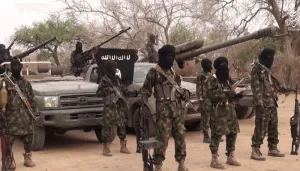
When you negotiate with killers, you legitimize their violence. When you pay them, you fund their next attack. And when you rehabilitate them without consequences, you tell others that terrorism is a shortcut to government benefits.
The negotiation tactics have made banditry look like a normal and profitable business venture in Nigeria. These deadly groups in northern villages now see kidnapping as a career option because they know the government will negotiate, pay ransoms and possibly even offer them amnesty later.
Meanwhile, innocent Nigerians, especially in rural areas continue to die. Schoolchildren are attacked and snatched from their classrooms. Worshippers are killed in their places of worship or prayer. Farmers are murdered on their various farmlands. Travelers are abducted on highways. And village heads are executed in their own communities.
The question Nigerians are asking is simple: why does the government keep using tactics that clearly do not work? How many more men, women and children must be kidnapped before leaders realize that begging terrorists only encourages more terrorism?
It is time for Nigeria to brutalise the brutalisers instead of negotiating with them. Countries that have successfully defeated insurgencies did not do so by appealing to terrorists’ better nature. They did so through sustained military pressure, cutting off funding sources, and making terrorism unprofitable and unsustainable.
For instance, Colombia has combatted Fuerzas Armadas Revolucionarias de Colombia (FARC) – [Revolutionary Armed Forces of Colombia], through sustained military operations, targeted strikes on FARC leaders, cutting off drug trafficking and funding sources, and intelligence-driven policing. These tactics forced FARC to a peace agreement in 2016, and not appeals to “their better nature.” Other countries like Peru, Northern Ireland and the Philippines did the same successfully. With political will, Nigeria can achieve this too.
The Nigerian military has capable personnel and equipment. What has been lacking is the political will to unleash them fully on terrorist groups. Every time the military gains ground, political interference and calls for dialogue undermine their efforts.
Security experts agree that negotiating from a position of weakness only prolongs conflict. Nigeria must first establish military dominance before any meaningful dialogue can happen. Terrorists should be coming to the government begging for mercy, not the other way around we are having right now.
The government should face this challenge head-on and treat these criminals like the animals they are. There should be no more amnesty programmes that reward killers with cash and training. No more rehabilitation that puts terrorists back on the streets to kill again. No more negotiations that legitimize violence as a tool for getting government attention and funding.
Northern governors and leaders who continue to sympathize with bandits should be arrested and held accountable. Their soft stance has cost thousands of lives and destroyed entire communities; some forever. It is time for them to choose which side they are on: the side of innocent citizens or the side of terrorists.
For too long, powerful voices have massaged the egos of killers and given them the sense that they are freedom fighters rather than murderers. This must stop! Every call for dialogue without first defeating these groups militarily is a betrayal of the thousands of Nigerians who have died at their hands.
The current administration under President Bola Tinubu must make a clear choice. Either commit fully to defeating terrorism through military force, or accept responsibility for the continued deaths of Nigerian citizens. There is no middle ground left. The negotiation strategy has been tested for over a decade and it has failed spectacularly.


Leave a comment