


An international joint investigation by the Associated Press and the PBS documentary programme FRONTLINE has exposed how a Nigerian internet fraudster posed as a woman on social media to sextort a Canadian teenager.
The multi-jurisdictional probe reveals a sprawling transnational cybercrime network involving social media manipulation, encrypted messaging applications, and international payment channels that have left young victims psychologically devastated.
According to the report, a Nigerian man in his early 20s identified as Ayomide used the pseudonym ‘Ava’ on TikTok to establish contact with the victim when he was 15 years old. After gaining the teenager’s confidence, the suspect persuaded him to move their conversations to Zangi, an encrypted messaging application.
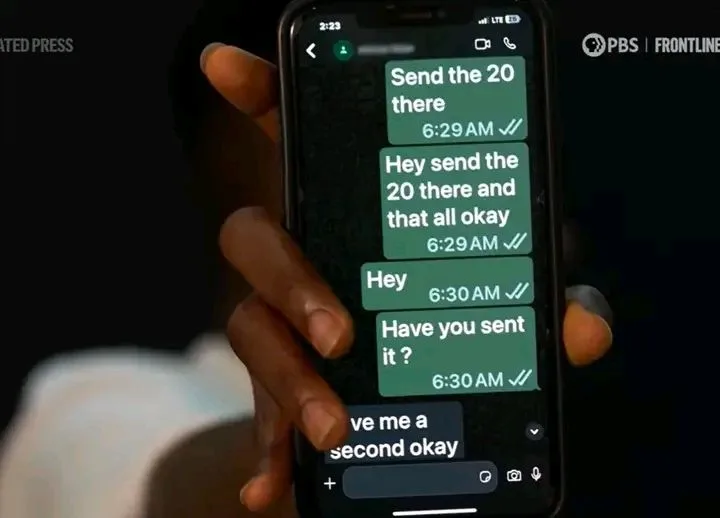
Ayomide then transmitted a downloaded internet photograph claiming it was his own, before coercing the minor into sharing an intimate picture. Armed with the explicit material, the suspect launched a relentless blackmail campaign, threatening to expose the teenager to his family, friends, and employer unless monetary demands were met.

The victim initially transferred $500 in an effort to halt the extortion, but the demands persisted, with total payments estimated by the victim at close to $2,000. Investigators reviewed more than 200 WhatsApp messages containing explicit threats, including screenshots of the victim’s social media followers and personal identification details.

Although the teenager eventually ceased responding after making what he considered a final payment, the suspect continued transmitting threats over multiple days.

When confronted by journalists in Lagos, Ayomide admitted to engaging in internet fraud to finance his accommodation and education, claiming he worked as a computer science student and a barbershop apprentice. Despite expressing regret during the interview, he resumed cybercrime activities with peers at his university shortly after promising to stop.
The investigation revealed that the suspect collected funds via Apple and Steam gift cards converted through resale applications, alongside PayPal accounts belonging to recruited money mules. PayPal restricted the identified accounts, Following notification from media investigators.
Data from the United States National Center for Missing & Exploited Children revealed that over 40,000 reports of financial sextortion were received by August, approaching the 50,000 total recorded throughout the previous year.
An FBI law enforcement attaché in Abuja, Charles Smith, warned that transnational cybercriminals are expanding aggressive tactics against any child with internet access.
“These perpetrators are becoming more and more aggressive. It can happen to any of our children, any child with access to a computer or online” – Smith.
Meanwhile, the Economic and Financial Crimes Commission (EFCC), in response to cross-border cybercrime challenges, has stepped up operational collaboration with United States law enforcement authorities.
EFCC Chairman Olanipekun Olukoyede reiterated the commission’s firm stance during engagements with investigators, declaring that the country will no longer tolerate illicit financial activities.
“Rest assured, Nigeria is no longer going to be a safe haven for fraudsters or criminal activities” – Olukoyede.
- Jigawa Judiciary appoints 17 magistrates, Shari’a court alkalis
- (PHOTOS) How Nigerian yahoo boy posed as woman to sextort Canadian teenager
- Gombe Governor donates ₦5m to families of accident victims
- Troops arrest seven suspects, recover 38 phones, vehicles in Plateau
- Fashola defends Tinubu’s electricity promise


Leave a comment